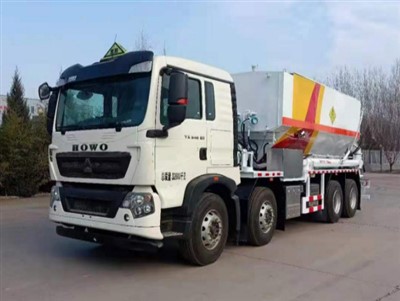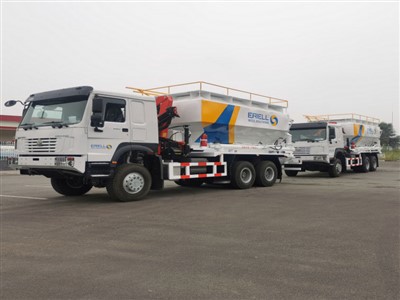
Hybrid explosives transport vehicles are a special node in the hazardous materials logistics system. Their operation is not arbitrary but strictly limited to an "applicable environment" defined by laws, regulations, technical standards, and safety logic. Clearly defining and adhering to these boundaries is the primary prerequisite for preventing accidents and ensuring public safety.
I. The "Institutional Environment" of Regulatory Access
The primary applicable environment is a legal institutional framework. Vehicles must obtain a "Road Dangerous Goods Transport Permit" issued by the transportation department, and drivers and escorts must hold corresponding professional qualification certificates. Every transport mission must adhere to a strict "Road Transport Dangerous Goods Waybill" management system, achieving full traceability of the approval, loading, transportation, and unloading process. Any operation without complete qualifications or approvals is illegal and absolutely prohibited.
II. The Carefully Planned "Route Environment"
Transport routes must be planned and registered in advance. In principle, priority should be given to roads away from densely populated areas, commercial centers, major transportation hubs, and drinking water source protection areas, and the use of ring expressways or designated national highways with hazardous chemical vehicle permits should be prioritized whenever possible. Unauthorized passage through urban core areas, tunnels, and large bridges is prohibited (unless specifically permitted). Driving times should avoid peak traffic hours and extreme weather periods to reduce external risks.
III. Controlled "Physical and Natural Environmental Conditions"
Vehicle operation has strict requirements for the physical environment. Road conditions should be good; avoid prolonged driving on rough or bumpy roads. Weather conditions are an important consideration: in case of severe weather such as heavy rain, fog, or snow that affects safe visibility and braking, driving should be suspended or a safe location should be found for parking. In hot weather, attention should be paid to cargo box ventilation and heat dissipation to prevent excessive internal temperature. Vehicles must be parked in dedicated, compliant hazardous chemical parking lots; parking in ordinary residential areas, public parking lots, or on unknown roadsides is strictly prohibited.
IV. Professional "Operating Endpoint Environment"
Loading and unloading operations can only be carried out on compliantly designed dedicated loading and unloading platforms. The area should have fireproof, explosion-proof, leak-proof, and static electricity-proof hardware facilities, be far from open flames and heat sources, and maintain a sufficient safe distance from surrounding buildings. The work site must have clear warning signs, available emergency supplies (such as fire extinguishers, absorbent sand, and flushing equipment), and personnel familiar with emergency plans. When transporting different explosives, the site must also meet the corresponding isolation and compatibility management requirements.
V. A Constantly Ready "Emergency Response Environment"
The most important "invisible" applicable environment is a highly efficient and interconnected emergency support network. Transport vehicles should not enter communication blind spots or remote areas where emergency rescue forces cannot reach quickly. The transporter must establish a reporting and communication mechanism with the transportation, public security, fire, environmental protection, and emergency management departments of the areas it passes through to ensure that in the event of an accident, the emergency plan can be activated immediately, professional rescue can be obtained, and the impact can be minimized.
In short, the "applicable environment" for mixed explosives transport vehicles is a limited and protected "channel" woven with safety red lines. It is by no means a simple extension of ordinary roads, but a systematic project that integrates legal permits, route planning, environmental assessment, fixed-point control, and emergency response. Only by operating in such an environment can the safety commitments of special transportation be truly fulfilled.