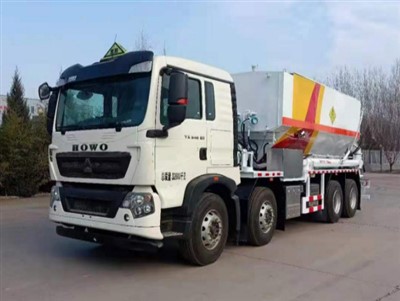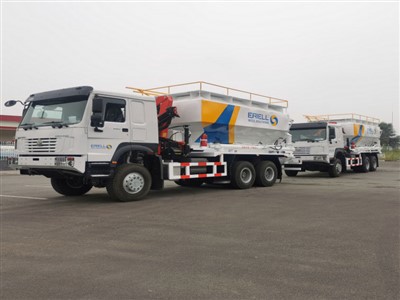
The "operating techniques" for hybrid explosives transport vehicles are not about shortcuts, but rather the art of maximizing safety redundancy and eliminating potential risks through skillful and steady operation, based on strict adherence to rigid regulations. It is the bridge connecting regulations and perfect execution.
I. Driving Operation: Stability as the Core
Smooth driving is the highest skill. Starting, stopping, and turning should all be extremely gentle to avoid cargo swaying or colliding due to inertia. Anticipatory driving is key: observe road conditions in advance, control speed with the accelerator, use the brakes as little as possible, and maintain a constant speed and linear trajectory. Maintain a safe distance from the vehicle in front far greater than that of ordinary vehicles, allowing ample time and space for emergency response. Before curves, slopes, and bumpy sections, significantly reduce speed in advance, proceeding with extreme caution.
II. Loading and Unloading Operations: Meticulousness as the Guiding Principle
Loading and unloading are high-risk processes; the skill lies in extreme precision.
1. Planning and Verification: Before loading and unloading, plan the storage locations of different explosives within the cargo container in advance, either mentally or on paper, strictly adhering to compatibility tables and ensuring isolation distances. During loading, implement a "double-checking" system: one person operates, and the other verifies the product name, batch, and location to prevent misloading and mixing from the source.
2. Handling Techniques: When using explosion-proof tools, apply even and controllable force. Throwing, rolling, or dragging packages is strictly prohibited. For non-standard parts or specially shaped goods, use customized padding and straps for personalized securing to ensure they remain immobile throughout the transportation process.
3. Space Utilization: Loading should be tight and secure, but necessary gaps must be left between packages and between goods and container walls to facilitate ventilation and inspection, and to prevent frictional heat generation.
III. Monitoring and Emergency Response: Prioritizing Prevention
Advanced skills are reflected in risk foresight and preparation.
• Continuous Sensory Monitoring: Drivers need to develop a "sixth sense" of the vehicle's condition. Beyond instrument readings, pay close attention to unusual odors (such as chemical leaks), unusual sounds (loose cargo, abnormal vehicle noises), and changes in handling (steering deviation, weak braking). These are often early warning signs from the instruments.
• Scenario Rehearsals: Before each day's journey, drivers and escorts should conduct a brief rehearsal of high-risk sections of the route (such as complex interchanges, long tunnels, and construction zones) to unify emergency communication and initial response strategies. When stopping for inspection, not only should you look, but you should also touch the tires to check their temperature and use tools to check the tightness of critical components.
IV. Team Collaboration: A Silent Understanding
Drivers and escorts should develop a tacit understanding that transcends words. Through regular drills, clearly define roles: while driving, one person focuses on controlling the vehicle and road conditions, while the other monitors the movement of vehicles behind, onboard monitoring data, and the surrounding environment. Anyone who notices even the slightest anomaly must immediately and clearly inform the other party, without concealment or underestimation. Communication should be concise, accurate, and use standard terminology.
V. Documentation and Records: Based on Practicality
Skilled management is equally important. All inspections, handovers, and records of abnormal situations must be filled out promptly, truthfully, and in detail. Clear and accurate records are not only a regulatory requirement but also a valuable basis for post-mortem analysis and continuous improvement. Proper management of vehicle maintenance files helps predict the lifespan of vehicle components, enabling preventative maintenance.
Conclusion: The highest skill in driving a mixed explosives transport vehicle lies in internalizing a sense of awe into muscle memory and conditioned reflexes. This is manifested in gentle hands on the steering wheel, focused eyes during loading and unloading, meticulous touch during inspections, and silent trust within the team. The ultimate goal of these skills is to transform every seemingly ordinary transport into a flawless and safe journey.