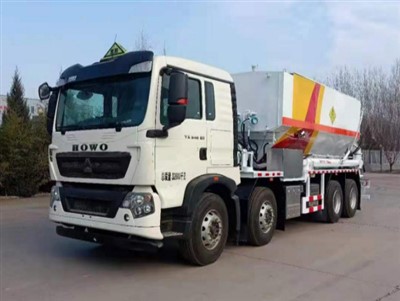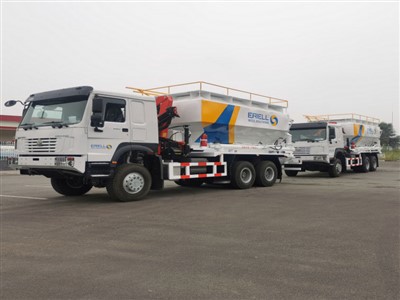
The "composition method" of hybrid explosives transport vehicles is far more than a simple assembly of parts; it is a sophisticated systems engineering project with "system safety" as its core objective, integrating special vehicle engineering, explosion-proof technology, electronic monitoring, and safety management science. Its composition follows a rigorous logic from design concept to physical integration.
Top-Level Design: Risk Analysis and Regulations as a Blueprint
Composition begins with top-level design. The core of the method is based on hazard identification and risk assessment, determining the types of risks the vehicle needs to withstand (such as collisions, fires, explosions, static electricity, leaks, etc.), and establishing the vehicle's performance indicators and safety level according to the national "Road Dangerous Goods Transport Rules" and special standards for explosives transport. This constitutes the "general outline" for all subsequent components, determining the overall direction of material selection, structural form, and system configuration.
Systematic Construction of Protective Units
This is the core of the physical composition, employing a layered, zoned modular construction method.
Load-Bearing and Driving Chassis: Based on a reinforced Class II special vehicle chassis. A high-power, highly reliable engine is selected, matched with a mature and stable transmission and braking system (often supplemented by a hydraulic retarder). The chassis frame is locally reinforced to provide a solid mobile platform for the upper protection unit.
Integrated Manufacturing of the Explosion-Proof Cargo Box:
Frame Forming: First, a robust cargo box frame is welded using high-strength rectangular steel pipes, forming a basic "cage-like" safety space.
Layered Composite: On the frame, from the inside out, the following are integrated sequentially: inner lining layer (antistatic, impact-resistant material, such as aluminum alloy or special plastic sheet), main protection/energy-absorbing layer (such as flame-retardant honeycomb aluminum, fireproof and heat-insulating material), and outer skin (high-strength steel plate or aluminum plate). Each layer is firmly bonded together using specific processes (such as welding, riveting, and bonding) to form a whole.Integration of Key Safety Interfaces: Explosion relief devices (such as explosion relief valves or explosion relief plates), explosion-proof ventilation openings, explosion-proof electrical interfaces, observation windows, antistatic grounding terminals, etc., are pre-installed and precisely installed on the cargo box body.
Safety Isolation Setup: A robust fireproof and explosion-proof partition is integrated between the driver's cab and the cargo compartment. Inside the cargo compartment, based on the compatibility table of the transported mixtures, physical separation is achieved through movable explosion-proof partitions or dedicated containers, forming independent safety compartments.
Integration and Interconnection of Functional Systems
Based on the protective unit, various functional subsystems are integrated, ensuring their coordinated operation.
1. Electrical and Monitoring System Integration:
A complete explosion-proof electrical system is installed, including explosion-proof wiring harnesses, lighting fixtures, and switches. An integrated intelligent monitoring unit connects signals from temperature and humidity sensors, vibration sensors, door magnetic switches, etc., to the on-board explosion-proof control box, and then connects to the back-end monitoring center via satellite positioning/wireless communication terminals, achieving integrated data acquisition, processing, and transmission.
2. Passive Safety Accessory Installation:
Mandatory safety accessories such as anti-static drag strips, side and rear guardrails, fire extinguisher brackets, and hazard warning lights/signs are installed on the chassis and exterior of the vehicle.
Ergonomics and User Interface Optimization
The assembly method must fully consider human factors. The layout of monitoring displays and alarm devices in the driver's cab should be optimized to ensure the driver can easily access critical information. Ergonomic loading and unloading auxiliary devices (such as hydraulic tailgates and explosion-proof lighting interfaces) should be designed to optimize the loading and unloading process. The storage location of accompanying documents (such as emergency guides and cargo cards) should also be standardized and fixed.
Final Verification: From Component Testing to System Integration
The completed vehicle must undergo a rigorous verification process, including:
1. Component Testing: Individual testing of brakes, lights, seals, grounding resistance, etc.
2. Specialized Tests: These may include explosion-proof performance testing, fireproof and heat insulation testing, static/dynamic stability testing, etc.
3. System Integration and Certification: Verifying that all monitoring, alarm, and communication systems function normally. Finally, the vehicle must pass inspection by a nationally designated agency and obtain relevant certificates such as the "Danger Goods Transport Vehicle Use Certificate," marking its transformation from an "industrial product" to a compliant "safety tool."
In conclusion, the method of assembling a hybrid explosives transport vehicle is a materialization process from abstract safety requirements to a concrete safety entity. Through rigorous systems engineering methods, it integrates, interconnects, and verifies special materials, specialized components, intelligent modules, and human experience and wisdom layer by layer according to a pre-set safety logic, ultimately forging a reliable entity capable of proactive defense, real-time perception, and safeguarding ultimate safety while on the move.