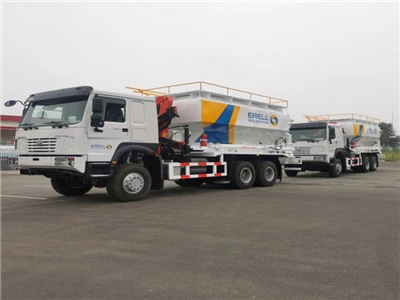
The design, construction, and operation of modern explosives production lines are far more than simple technical blueprints; they embody decades of industry practice, gained at great cost, and deeply ingrained in the industry.This experience transcends general operating procedures, evolving into core principles and collective wisdom guiding the industry's survival and development. This is primarily reflected in the understanding of the nature of risk, the "ironclad rules" of engineering practice, and the shaping of a management culture.
I. Absolute Respect for Risk: The Starting Point of All Experience
The most fundamental experience stems from absolute respect for the hazardous properties of explosives. Countless accident analyses reveal that their risks are "non-negotiable." Any negligence regarding the excitation energy of heat, friction, impact, or static electricity, any slight deviation in process parameters, or any (a gambler's mentality) regarding the possibility of "accidents" can lead to irreversible disasters. Therefore, the primary experience is establishing a "zero-risk" mindset: that is, not acknowledging "absolute safety," but only pursuing the reduction of risk to the lowest acceptable level through systematic means. This profound sense of awe is the psychological and cultural foundation upon which all safety procedures are taken seriously. II. The "Iron Laws" of Engineering Practice: Space, Isolation, and Redundancy The lessons learned from tragic accidents have directly forged the core principles of engineering design, which have become inviolable "iron laws":
1. Safety Distance is the Lifeline: The "external safety distance" and "internal minimum allowable distance" that must be maintained between the plant and surrounding facilities, and between processes, represent a spatial cost marked by countless lives and property losses. Any encroachment or compression is an invitation to disaster.
2. Quantitative Limitation is a Hard Constraint: Strictly limiting the maximum amount of explosives stored in each process and workshop is the fundamental method for controlling the scale of accidents at the source. "Reduction" is considered the core approach to improving inherent safety.
3. Isolation is the Fundamental Means: This includes physical space isolation, human-machine operation isolation, and isolation between different hazardous processes. In particular, the design and application of "explosion-proof chambers" and "protective earthen embankments" embody the engineering wisdom of "limiting the consequences of accidents to a localized area." 4. Redundancy and interlocking are the "fuse": Critical equipment and safety systems must be redundantly configured, and any abnormality in critical process parameters (temperature, pressure, flow rate) must trigger automatic interlock shutdown. Relying on reliable hardware and automated program responses, rather than single human intervention, is the most valuable automation experience.
III. The Core of Management Culture: Systems, Discipline, and "Anti-Habits"
At the management level, a unique and rigorous experience system has been formed:
1. The power of the system is greater than the individual: Relying on strict rules and procedures (such as fixed personnel, fixed positions, fixed quantities, and patrol inspections), rather than individual experience and sense of responsibility. All operations must be "based on rules and regulations."
2. Discipline is paramount: Regulations such as eliminating static electricity and wearing anti-static clothing before entering specific areas, using only copper tools, and strictly prohibiting the carrying of fire sources are iron discipline to combat instinctive inertia and randomness.
3. Extreme sensitivity to "abnormalities": Cultivating all employees' awareness and reporting obligation for any minor "abnormalities" such as sound, smell, temperature, and equipment vibration. Nip potential accidents in the bud is the most cost-effective safety investment.
4. Continuous Training and Drills: Through repeated, realistic emergency drills, correct response methods are transformed into muscle memory, ensuring that the correct actions are taken subconsciously in emergency situations.
IV. Iteration of Technology and Concepts: From "Mending After the Fence" to "Intrinsic Safety" The history of the industry is itself a history of evolving experience. From an early focus on post-accident remediation to today's emphasis on prevention and "intrinsic safety" design-that is, fundamentally eliminating or reducing hazards through process flows (such as detonator-free sensitivity, low-pressure emulsification), automation (human-machine isolation), and engineering techniques, rather than merely relying on management and protection. This shift from passive to proactive, from "managing behavior" to "changing the system," represents the highest form of experience accumulation.
In short, the experience of explosives production lines is a "survival manual" written with lessons learned, on how to coexist with extremely high risks. Starting from a profound understanding of the dangerous attributes of "objects," it externalizes into rigid engineering regulations on "space," "quantity," and "isolation," internalizes into strict disciplinary constraints on the behavior and consciousness of "people," and ultimately sublimates into continuous technological innovation in pursuit of "inherent safety." The value of these experiences lies not only in ensuring the safe development of the industry itself, but also in providing a valuable paradigm for risk control for other high-risk industries.