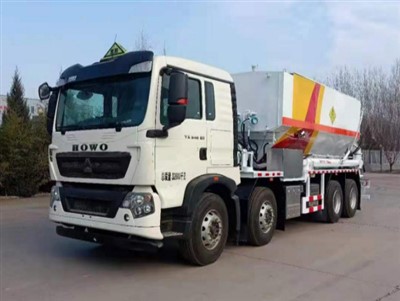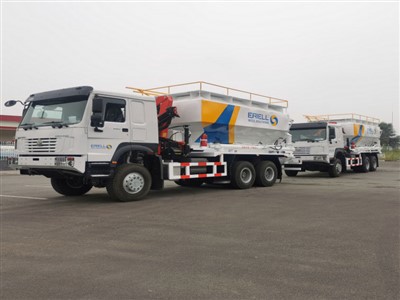
The construction of underground loaders is far more than just the operation of a single piece of equipment; it is a systematic project integrating equipment management, engineering collaboration, and safety control. Its construction standards are mandatory guidelines and technical guarantees to ensure the safe, efficient, and orderly progress of mine or tunnel engineering, spanning the entire equipment lifecycle and the entire operational process.
Equipment Access and Site Layout Standards
1. Equipment Compliance Standards: The LHD (Local High-Device Loader) put into use must meet the national mine safety mark (KA) certification and related explosion-proof requirements (if applicable). Its technical parameters (such as dimensions, power, and load capacity) must be compatible with the cross-section of the working roadway, ventilation capacity, and hoisting and transportation system; "oversized equipment for small loads" or "undersized equipment for large loads" is strictly prohibited.
2. Work Site Environmental Standards: Before construction, it must be ensured that the roof and sides of the working face (such as the stope or tunnel face) are stable after "knocking on the roof and sides to check for structural integrity," that lighting is sufficient, and that ventilation meets requirements. Roads must be flat, free of standing water and obstacles, and the slope must meet the equipment's design limits. Clear warning signs and necessary safety shelters must be provided.
Work Flow and Collaborative Construction Standards
1. Standardized Work Procedures: Develop and strictly implement the "Underground Loader Safety Operation Procedures," covering every step from pre-shift inspection, starting, driving, loading, unloading, parking to shift handover. Any form of simplification or violation of regulations is strictly prohibited.
2. Collaborative Operation Standards: In ore extraction and blending, LHD (Low-Heat Loader) must establish clear communication and collaboration signals (such as lights, whistles, and wireless communication) with mining trucks, crushers, and other equipment. Loading and unloading points must be directed by designated personnel or have clear visual guidance to prevent vehicle collisions and material spillage. During tunneling operations, the working sequence and spatial avoidance of LHD with drilling rigs and bolting rigs must be strictly regulated.
Maintenance and Inspection Standards
1. Preventive Maintenance System: Establish a tiered (daily, weekly, monthly, annual) preventive maintenance plan based on the equipment manufacturer's technical manual. The standards must clearly define the mandatory inspection items, technical parameters (such as engine oil contamination level, hydraulic oil cleanliness, tire tread depth), replacement cycles, and acceptance standards for each level of maintenance.
2. On-site Inspection and Condition Monitoring Standards: Specify the daily inspection procedures and record forms for operators and maintenance workers. Establish mandatory inspection checklists for key components (such as braking systems, steering systems, working mechanisms, and fire protection systems). Encourage and standardize the use of predictive maintenance technologies such as oil analysis and vibration monitoring to detect potential faults in advance.
Safety, Health, and Environmental Standards
1. Intrinsic Safety Standards: Vehicles must be equipped with intact rollover protection structures, falling object protection structures, automatic fire extinguishing systems, and reversing and personnel approach alarm devices. In areas where toxic or harmful gases may be present, equipment must be equipped with compliant monitoring and protection facilities.
2. Personnel Health and Environmental Protection Standards:
- Emission Control: Exhaust emissions from diesel-powered LHDs must meet national and industry-mandated downhole emission limits and be tested regularly. The use of high-standard fuels and lubricants that meet emission requirements is encouraged.
- Noise and Vibration Control: Equipment operating noise must be controlled within permissible limits. The operator's cab should meet ergonomic and vibration reduction requirements.
- Oil and Waste Management: Strict procedures for fuel and hydraulic oil addition and leak handling must be established. Hazardous waste such as waste oil and used filter elements must be centrally collected and disposed of arbitrarily underground.
Documentation, Training, and Emergency Standards
1. Documentation Management Standards: A complete technical file must be established for each LHD, including an instruction manual, maintenance manual, maintenance records, overhaul records, fault analysis and modification records, etc., to achieve full lifecycle traceability.
2. Personnel Qualification and Training Standards: Operators and maintenance workers must undergo specialized training and pass the examination, and hold a certificate to work. Training content must cover equipment principles, operating procedures, maintenance, fault identification, emergency response, etc., and regular refresher training is required.
3. Emergency Response Standards: Detailed on-site emergency response plans must be developed for potential accidents such as fires, leaks, entrapment, and overturning of the equipment, and corresponding emergency equipment (such as fire extinguishers, breathing apparatus, and rescue tools) must be provided. Regularly organize emergency drills.
Conclusion: The construction standards for underground loading vehicles constitute a dynamic management system encompassing all aspects of "people, machinery, materials, methods, and environment." Through mandatory technical specifications, process constraints, and management requirements, it integrates the efficient operation of individual pieces of equipment into the safety, environmental protection, and sustainability of the entire production system. Strict adherence to these standards is crucial for transforming advanced engineering machinery into stable and reliable productivity, and is the fundamental principle for ensuring that deep-earth construction proceeds on a controllable track.