Explosives production lines are not merely abstract industrial concepts; their practicality stems from their exceptional ability to address critical real-world needs.Within a strict legal and safety framework, they transform highly hazardous chemical energy into a plannable, controllable, and reliable fundamental engineering force. Their core value is embodied in four closely interconnected dimensions: efficiency, safety, adaptability, and sustainability.
The Cornerstone of Basic Efficiency: Providing Core Momentum for Resource Extraction and Infrastructure Construction
The most direct manifestation of their practicality lies in providing an irreplaceable efficiency solution for modern large-scale resource extraction and infrastructure construction. In mines, whether it's the massive stripping of open-pit mines or the tunneling of underground mines, industrial explosives, primarily emulsion explosives and ammonium nitrate explosives, are the most economical and efficient means of breaking hard rock masses. The large-scale, continuous, and stable output of production lines ensures a stable supply of "industrial food" for mining production, directly impacting national energy and resource security. In major projects such as railways, highways, and hydropower projects, precise explosive blasting is a core construction method for traversing mountains and excavating foundation pits. The construction progress and cost control largely depend on a stable supply of high-quality, predictable explosives. The production line is the material source for achieving this "stable supply."
The Physicalization of Safety Assurance: Constraining System Risks to a Controllable Space
Its practicality is further manifested in its systematic "taming" of extreme risks. Through the design of a modern production line featuring "human-machine isolation, remote control, quantitative production, and automatic protection," the originally highly dangerous chemical operations are transformed into automated processes that can be monitored and intervened in a central control room. This design minimizes the risks of human error and improper contact between hazardous materials and the environment, achieving proactive risk isolation and inherent process safety. Compared to decentralized and rudimentary production methods, modern centralized production lines not only improve efficiency but also represent a qualitative leap in safety capabilities, a concrete engineering practice of the "safe development" concept in the field of hazardous materials manufacturing.
Flexible and Adaptable Solutions: Meeting Diverse Engineering Needs
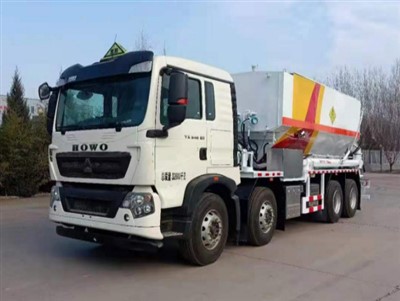
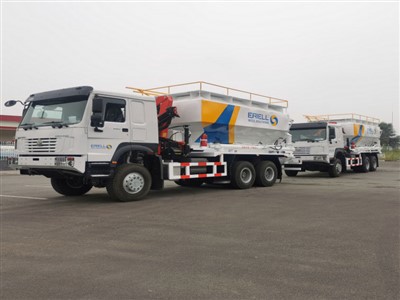
Its practicality also possesses high flexibility. The modern explosives industry offers diverse product solutions through various production lines (such as fixed packaging lines and on-site mixing ground stations) and technical formulations. Large open-pit mines can utilize an integrated model of "ground station matrix production + on-site mixing trucks" to achieve precise blasting and zero-finished product storage; while small and medium-sized projects or specific blasting environments requiring standard explosive cartridges are supplied with products of corresponding specifications by fixed packaging production lines. This flexible adaptability allows engineering blasting to upgrade from "using any available explosives" to "using the most suitable explosives," thereby optimizing blasting effects and controlling overall costs.
The Pivot of Compliance and Traceability: Achieving Transparent Management Throughout the Chain
At the regulatory level, modern, compliant production lines are the key physical fulcrum for implementing the national "closed-loop management of the entire life cycle" of civilian explosives. Seamless integration of the production line with the national-level management information system makes the identity, flow, and final use of each product transparent and traceable from the source of production. This provides a data foundation for lean management in enterprises and builds a solid technical barrier for public safety supervision, effectively preventing the illegal loss and misuse of products. Its practicality at the social management level is crucial.
In conclusion, the practicality of explosives production lines lies in their systematic solution to the contradiction between "efficiently acquiring energy" and "absolutely controlling risk." They serve as both a powerful engine driving the development of basic industries and a safety anchor locking in risks. Their value lies not only in the products themselves, but also in their ability to safely integrate explosive energy into the grand process of national modernization in a highly standardized, stable, and reliable manner.