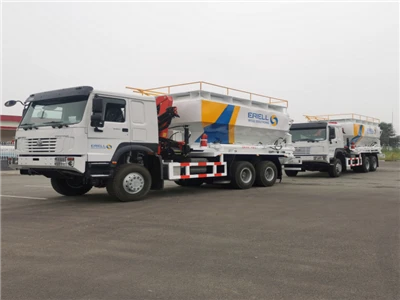
Mixed explosives transport vehicles are crucial tools in the transportation of special hazardous chemicals, and their routine maintenance directly impacts public safety and transportation efficiency. Standardized and meticulous daily maintenance and management are the core guarantees for ensuring a flawless transportation process.
I. Comprehensive Pre-Departure Inspection A systematic inspection must be conducted before each departure. First, check the vehicle's external condition, including whether there is any obvious damage or rust on the body, whether the tire pressure and wear are normal, and whether the lights, brakes, and steering system are sensitive and reliable. Then, focus on inspecting the cargo box: whether the sealing performance is intact, whether the anti-static grounding device is effectively connected, and whether the fire prevention, explosion prevention, and leakage prevention facilities are in a ready state. Any minor potential hazards must be thoroughly eliminated before departure.
II. Strict Control of Loading and Unloading Processes Loading and unloading operations are high-risk processes. Vehicles must be parked in designated safe areas with warning signs posted. Operators must wear anti-static clothing and use explosion-proof tools. Explosives of different properties must be strictly separated and isolated according to compatibility tables to prevent interactions. Handle with care during loading and unloading, avoiding collisions and friction. After loading, immediately lock the cargo container and verify the cargo list and quarantine measures to ensure accuracy.
III. Dynamic Monitoring During Transportation
During transportation, the driver must maintain a smooth driving style, avoiding sudden braking and jolting. Through a satellite positioning and monitoring system, the backend can track vehicle location, speed, and key data such as temperature, humidity, and vibration inside the cargo container in real time. The driver should periodically stop to check for any abnormalities in the cargo container door locks, cargo securing, and vehicle condition. Any abnormalities must be handled immediately according to the contingency plan and reported.
IV. Proper Handling After Vehicle Return
After completing the transportation task, the vehicle must be driven back to the designated parking lot. A thorough cleaning should be performed to remove any residue from the vehicle body and cargo container. A comprehensive inspection and maintenance of the vehicle should be conducted, and emergency supplies such as fire extinguishers and absorbent materials should be replenished. All inspection and maintenance records must be meticulously archived to form a traceable management loop.
V. Continuous Personnel Training and Emergency Preparedness
Nursing is not only a requirement for vehicles but also a routine requirement for personnel. Drivers and escorts must receive regular safety training and emergency drills, and be familiar with the characteristics of various explosives and emergency response procedures. Emergency plans, communication equipment, and protective gear on board the vehicle must be kept readily available at all times.
The daily maintenance of mixed explosives transport vehicles is a systematic project that integrates rigorous procedures, meticulous operation, and a high degree of responsibility. Only by implementing every procedure effectively can an unbreakable safety barrier be built, ensuring the safe completion of every transport mission.