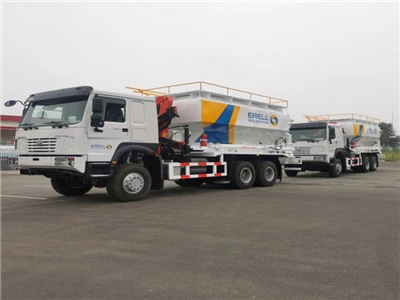
The inspection of hybrid explosives transport vehicles is far more than a simple "vehicle condition check"; it is a comprehensive, multi-dimensional, and mandatory safety verification system that runs throughout the entire transport mission. It ensures that the vehicle, personnel, cargo, and operational procedures are always within an absolutely controlled safety boundary.
I. Pre-Departure "Three-in-One" Basic Inspection
Before the mission begins, the inspection must cover three core areas:
1. Personnel Qualification Verification: First, confirm that the driver and escort's dangerous goods transport qualification certificates are valid and that they have completed recent safety training. Conduct a verbal inquiry into their mental state and basic safety knowledge before they start work.
2. Vehicle Static Safety Inspection:
◦ General Vehicle Condition: Check the engine, brakes, steering, lights, tires (pressure and wear), chassis, etc., to ensure they are in normal working order.
◦ Specialized Safety Devices: Test the effectiveness of the fireproof cover, conductive drag strip, and main power switch; check the fire extinguisher (pressure, expiration date) and hazard warning lights/signs to ensure they are complete and in good working order.
◦ Cargo Container Inspection: Verify the cargo container's sealing, anti-static grounding wire resistance (usually required ≤10Ω), ventilation condition, and the absence of foreign objects or sharp protrusions inside. For vehicles transporting mixed explosives, also confirm that the internal insulating pads and securing devices are intact and reliable.
3. Document and Plan Review: Check if the "Dangerous Goods Waybill" for this transport is fully approved, and verify that the cargo name, category, and quantity match the waybill. Confirm that the planned route, time, and emergency contact information have been filed and communicated to relevant personnel.
II. Real-time Synchronous Monitoring During Loading Operations
The loading process is a dynamic risk point, and monitoring must be conducted simultaneously:
1. Environmental and Equipment Monitoring: Confirm that the loading area is a dedicated site, free of ignition and heat sources, and that fire-fighting and emergency equipment are in place. Check that the loading and unloading equipment used is explosion-proof.
2. Operational Compliance Supervision: Supervise whether operators are wearing anti-static clothing, and whether they handle items with care, preventing impacts and friction. 1. Verify cargo labels to ensure compatible explosives are properly separated and loaded; incompatible items must not be mixed.
2. Post-loading sealing and status confirmation: After loading and securing, immediately lock the cargo box and apply a special seal. Finally, check that the vehicle's total weight and axle load are within limits and that the cargo is evenly loaded.
III. Dynamic and scheduled inspections during transportation
Continuous inspections during vehicle operation:
1. Continuous driver monitoring: The driver must continuously monitor the vehicle's operating status (unusual odors, noises, abnormal handling) using the dashboard and their senses.
2. Scheduled stop inspections: Every 2 hours or approximately 200 kilometers, a safe area should be chosen for a stop inspection. Key checks include: tire temperature and condition, whether cargo is securely fastened, the integrity of cargo box door locks and seals, any signs of leakage, and whether the ground contact area is effectively in contact with the ground.
3. Electronic System Monitoring: Monitor the onboard terminals (satellite positioning, driving recorder) to ensure they are functioning properly. The backend monitoring center simultaneously and remotely monitors vehicle location, speed, and cargo box internal temperature and humidity sensor data.
IV. Closed-Loop Terminal Inspection After Unloading and Return
The task endpoint is not the inspection endpoint:
1. Empty Vehicle Inspection After Unloading: After unloading, thoroughly inspect the cargo box interior, removing any residue or stains. Check the internal structure of the cargo box (such as lining and fixing points) to ensure it is intact after this transport.
2. Comprehensive Inspection and Maintenance After Return: After the vehicle returns to the dedicated parking lot, conduct a comprehensive inspection similar to the pre-departure inspection, and perform necessary maintenance as needed (such as cleaning, tightening, and replenishing consumables). Any problems found during the inspection must be repaired and recorded before the next trip.
3. Record Archiving: Archive and save all documents from the entire task process, including the "Pre-Departure Inspection Checklist," "In-Transport Inspection Record," and "Vehicle Maintenance Record," forming a traceable and complete closed-loop inspection system.
In summary, the inspection process for mixed explosives transport vehicles is a comprehensive network centered on "eliminating hidden dangers," integrating institutional verification, physical inspection, behavioral supervision, and technical monitoring. Through standardized and repetitive verification actions, it constructs an impregnable defense against risks, serving as a faithful guardian of the lifeline of special transportation safety.