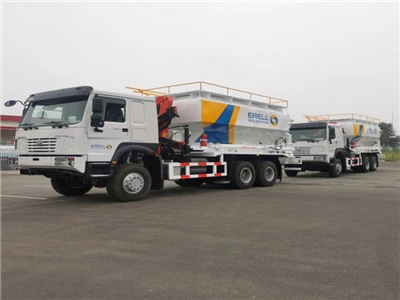
The material selection for hybrid explosives transport vehicles is not merely a combination of ordinary metals and parts, but a systems engineering approach with "passive safety" as its core design philosophy. Every material used aims to construct a "mobile safety container" capable of withstanding external impacts, isolating internal risks, and achieving controlled energy release.
I. Outer Shell and Cargo Box: A Multi-Layer Composite Protective Fortress
The core of the transport vehicle, the cargo box (explosion-proof compartment), generally employs a multi-layer composite structure.
1. Outer Skin: Typically made of high-strength weather-resistant steel or aluminum alloy. High-strength steel provides excellent impact resistance and fragment penetration resistance; aluminum alloy, while maintaining a certain strength, significantly reduces the vehicle's weight and possesses good corrosion resistance. The outer surface is often coated with a special fire-retardant and anti-static coating.
2. Intermediate Barrier/Energy-Absorbing Layer: This is a critical buffer layer. It commonly uses flame-retardant honeycomb aluminum, heat-insulating aluminum silicate fiberboard, or composite ceramic armor plates. Its core function is to absorb and dissipate energy through deformation and fragmentation when subjected to localized impacts or explosions, preventing energy from being directly transferred to the inner or outer layers.
3. Inner Lining: In direct contact with cargo packaging, it requires impact resistance, fire resistance, and resistance to friction-induced static electricity. Antistatic rubber sheets, copper-aluminum alloy linings, or special engineering plastics are commonly used. Their smooth surfaces and low resistivity effectively conduct static electricity, preventing sparks from friction-induced damage to the cargo packaging and resisting everyday bumps and knocks.
II. Vehicle Body Structure and Chassis: A Rigid and Flexible Load-Bearing Foundation
1. Chassis and Frame: Must possess superior load-bearing and torsional rigidity, generally employing a double-layer beam structure made of high-strength alloy steel (such as Q345B). In the event of a severe collision, this material can absorb energy systematically through pre-designed deformation zones, preserving the structural integrity of the passenger compartment and cargo box as much as possible.
2. Cargo Box Frame: The supporting frame of the cargo box is mostly welded from high-strength rectangular steel pipes or special profiles, forming a robust cage structure to ensure no deformation under various complex stresses.
III. Key Components and Sealing System: Safety Guaranteed in the Details
1. Explosion-proof Electrical Equipment and Cables: All electrical components of the vehicle (lights, wiring, switches) must meet explosion-proof standards. Cables are flame-retardant and armored, and joints are treated with special explosion-proof seals to prevent electrical sparks from becoming ignition sources.
2. Sealing System: The sealing of all interfaces, such as cargo box doors, observation holes, and ventilation openings, is crucial. Multi-layered silicone rubber and fluororubber special sealing strips, resistant to high and low temperatures and aging, are used, and a labyrinthine structure is designed to ensure the airtightness and dustproof and waterproof rating of the cargo box, preventing leakage of internal harmful substances and blocking external fire sources or sparks from entering.
3. Fireproof and Explosion-proof Design: A firewall is installed between the engine compartment and the cargo box, using aluminum silicate fireproof board and intumescent fireproof sealant. Some high-end models also feature explosion-proof panels (usually made of brittle metal plates or composite materials of a specific thickness) in their cargo boxes. In extreme cases, these panels guide the blast wave and flames in a predetermined direction (usually upwards) to protect the vehicle and its surroundings.
IV. Auxiliary Safety Facilities
• Static Electricity Discharge Device: The conductive drag strip typically incorporates metal wires and highly abrasion-resistant rubber to ensure reliable grounding.
• Explosion-Proof Tank (if equipped): Used for transporting precursors of liquid explosives, it is often made of a stainless steel inner liner combined with an outer protective layer.
Conclusion The materials used in hybrid explosives transport vehicles represent a masterpiece of materials science, mechanics, and safety engineering. From the robust outer shell to the flexible sealing strips, from the conductive lining to the energy-absorbing interlayer, each material fulfills a specific safety mission in its place. Together, they construct a dynamic defense system whose ultimate goal is to use the strength of the materials to mitigate the intensity of the risks, safeguarding an unwavering commitment to safety within a steel body.