Modern explosives production lines are not a single model; their design, construction, and operation exhibit significant diversity. These differences are not arbitrary but rather the result of systematic and differentiated adaptation based on the core technologies employed, pre-set capacity, safety concepts, and the target market served. The main differences lie in four dimensions: technical approach, capacity scale, safety level, and application direction.
I. Differences in Technical Approaches: Process Essence and Product Range
This is the most fundamental difference in production lines, determining their product types and core processes. It is mainly divided into:
Emulsion Explosives Production Line: The current mainstream technology. Its core is the formation of a water-in-oil latex matrix through emulsification technology, followed by sensitization. This process inherently has a high safety level (atmospheric or low pressure), and the product has water resistance, high density, and excellent explosive performance. It can be further subdivided into gel-like emulsion (high viscosity, suitable for small-diameter cartridges) and pump-type (good fluidity, suitable for on-site mixing trucks), etc. Ammonium nitrate (AM) explosive production lines: The process is relatively simple, mainly involving mixing porous granular ammonium nitrate with diesel fuel through wheel milling or spiral mixing. Investment in these lines is relatively low, but the product is not water-resistant and has a relatively low explosive power. In recent years, on-site mixing of AM explosives by truck (transporting raw materials to the blasting site for mixing) has become mainstream, leading to a decline in the proportion of fixed production lines.
Other specific product production lines: Such as dedicated lines for producing expanded ammonium nitrate explosives or modified AM explosives. They have unique characteristics in sensitization methods, formulations, and product performance to meet the needs of specific blasting environments.
II. Differences in Production Capacity: Economic Efficiency and Regional Adaptability
Based on national industrial policies and market demand, production line capacity is clearly tiered. Large-scale production lines (e.g., tens of thousands of tons per year) typically employ highly continuous and automated processes, equipped with large equipment and central control systems, serving large mines or regional supply centers, resulting in significant economies of scale. Small and medium-sized production lines (thousands to tens of thousands of tons per year) may use intermittent or semi-continuous processes, with a relatively compact layout, aiming to meet regional and diversified market demands. Production capacity directly impacts the complexity of production line layout, investment scale, and automation level.
III. Differences in Safety and Automation Levels: The Degree of Intrinsic Safety
This is a key benchmark for measuring the advancement of a production line. The core difference lies in the degree of "human-machine separation":
Traditional or Semi-automated Production Lines: Some hazardous processes still require manual or semi-automatic operation near the equipment, resulting in a higher probability of personnel exposure to risky environments.
Intelligent, Minimal-Manpower Production Lines: This is the current mainstream development. High-risk processes such as pharmaceutical manufacturing, filling, and packaging achieve full automation and remote control, with very few on-site operators (e.g., less than 5 people), even achieving "unmanned workshops." Centralized monitoring in the control room, equipped with comprehensive interlocking protection and intelligent video analysis systems, significantly improves the level of intrinsic safety.
IV. Differences in Application Orientation: Customization and Functional Integration
Production lines can be categorized based on the final product delivery method:
Fixed Packaging Production Lines: Primarily produce standard-sized bagged or roll-type pharmaceutical products, stored in warehouses and transported to users by vehicle.
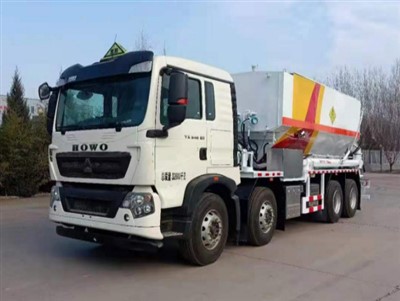
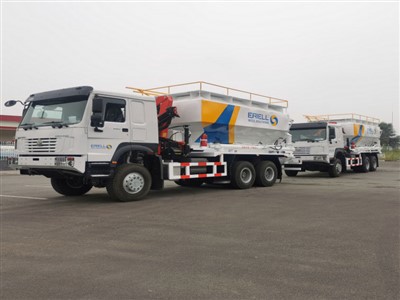
On-Site Mixing Ground Stations and Distribution Systems: This is one of the most advanced models. Ground stations produce emulsified matrices or mixed raw materials, which are then transported to the blasting site in specialized mixing vehicles. Sensitization, mixing, and loading are completed inside the vehicles. This achieves "raw material transportation, on-site manufacturing, and immediate use," completely eliminating intermediate finished product storage and transportation, ensuring maximum safety, and allowing for customized blasting effects.
In summary, the differences between explosives production lines are the result of a systemic differentiation. From fundamentally different chemical processes to varying production capacity designs; from varying degrees of safety isolation to diverse product delivery methods, these differences collectively shape a multi-layered, complementary industrial supply system. Its evolutionary logic has always been: under the premise of meeting strict national regulations and standards, continuously pursuing higher safety, better economy, and stronger market adaptability through technological innovation and engineering optimization.