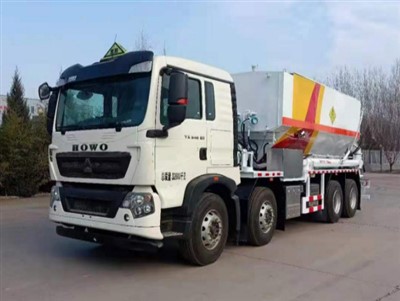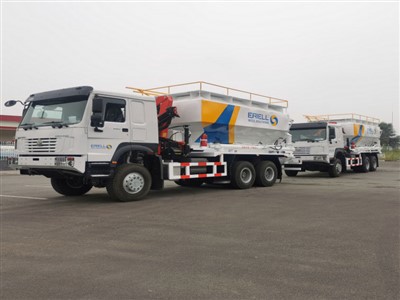
An explosives production line is a highly unique component of the human industrial system. It does not pursue maximum capacity or efficiency, but rather strives to establish a dynamic balance between "danger" and "control" in the process of handling extremely hazardous materials. Its core characteristics profoundly embody the integration of safety philosophy and engineering technology, which can be summarized into the following four interrelated features:
I. The Absolute and Indispensable Nature of High-Risk Attributes
This is the root of all characteristics. The materials handled by the production line (such as ammonium nitrate, TNT, etc.) possess inherent flammable and explosive chemical properties, and are extremely sensitive to heat, friction, impact, static electricity, and even specific pressure environments. This high-risk attribute is an absolute and immutable physical and chemical law. Therefore, every link, every design, and every operation of the production line must be based on the premise of "acknowledging and absolutely respecting this danger." Any attempt to compromise safety for efficiency, cost, or convenience may lead to catastrophic consequences. This clear understanding of the inherent danger is the starting point for all its design logic and management systems.
II. Passive Defense and Spatial Isolation of Engineering Structures
To address inherent high risks, the core of production line engineering structure design is "passive defense" and "spatial isolation." This is reflected at multiple levels: First, large-scale isolation within the factory area; the production line must maintain the legally mandated "external safety distance" between itself and the main warehouse area, surrounding residential areas, and major transportation routes. Second, small-scale isolation between processes; maintaining a "minimum permissible internal distance" between hazardous workshops, and using heavy reinforced concrete blast-resistant walls or rammed earth embankments as barriers to ensure that an accident at one point will not ignite adjacent points. Finally, explosion-proof building design; hazardous workshops use lightweight pressure-relief roofs or walls to release shock waves in a directional manner during an accident, sacrificing local structures to protect the main structure and personnel. The entire structure acts as a carefully designed "risk buffer and absorption container."
III. Active Control and Human-Machine Isolation in the Production Process
Modern advanced production lines achieve "active control" of hazardous processes through high levels of automation, informatization, and intelligence. Their core strategies are "human-machine isolation, remote operation, and quantitative production." Operators monitor the entire process via computer interface in the central control room, utilizing industrial robots and automated conveyor systems to complete all hazardous procedures from drug manufacturing and loading to packaging, achieving "unmanned" or "minimal" operation on-site. Simultaneously, strict "quantitative" management is implemented, meaning the amount of hazardous materials stored on-site is precisely controlled within safe thresholds. The production system is also equipped with numerous interlocking devices (such as automatic shutdown for exceeding temperature, pressure, and flow limits) and rapid explosion suppression systems, striving to automatically intervene and prevent accidents at their earliest stages.
IV. Systemic Closed-Loop and Strongly Supervised Management System The explosives production line is not an independent technical unit, but a "social-technical system" within a tightly controlled national regulatory network. Its management is characterized by full-chain traceability and strong supervision. From raw material procurement, production, storage, and sales to final disposal after use, every gram of explosives is monitored by a closed-loop electronic tracking system (such as "two-code" management, box code, and item code). The company's production activities are subject to continuous supervision and on-site inspections by multiple departments, including emergency management, industry and information technology, and public security. This systematic management ensures that technical safety measures are implemented without fail and strictly confines production activities within the legal framework required for national economic development and public welfare projects.
In summary, the explosives production line is characterized by a sophisticated safety system built upon the premise of acknowledging absolute risk, through three dimensions: engineering defense, process control, and system management. Its ultimate goal is to safely release the fundamental energy serving social development while firmly locking away the "Pandora's box."